

Elodea: Identify & Control
Also known as Canadian waterweed, Elodea is a popular aquarium plant native to North America.
Identify Elodea
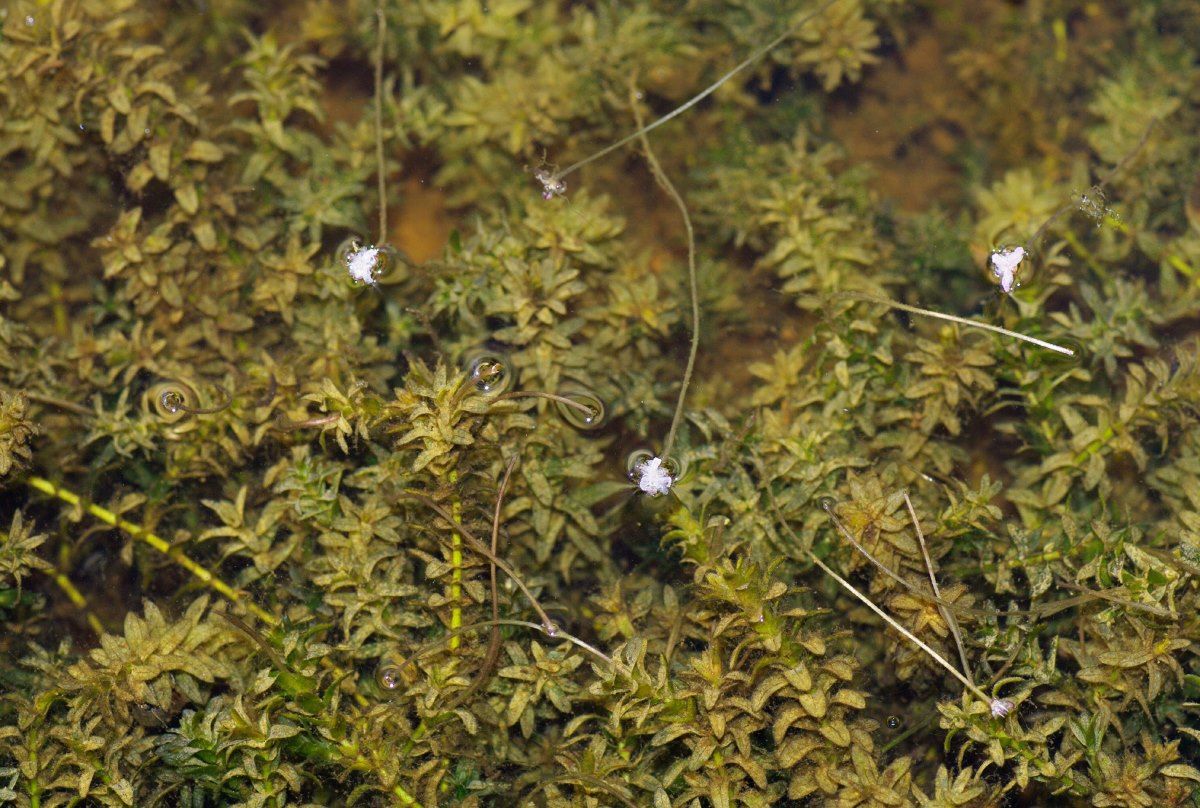
Elodea’s dark green blade like leaves grow in whorls of three around a central stem. The flowers of Elodea have three white petals with a waxy coating that make them float, and the flower is the only part of the otherwise submerged weed that can be seen above the surface of the water.
The plant is often confused with Hydrilla, but Hydrilla leaves grow in whorls of four to eight and have midrib teeth, making the plant feel rough when pulled through the hand. Also, the Hydrilla plant does not flower as the Elodea does.
As with other submerged aquatic plants, Elodea provides a habitat for many invertebrates that fish and other animals eat. Unfortunately, Elodea is prone to growing in thick, closed structures that aren’t compatible dwellings for larger fish or animals. It can quickly take over areas where water is less than 10 feet deep and near stream inlets, where it commonly thrives.
Interestingly, this plant also can grow free floating and detached from any root system, making Elodea control difficult, more so than other aquatic plants.
Control Elodea
Though a popular aquarium plant, Elodea has been declared an invasive species and is illegal to sell in the states of Oregon, Alabama, South Carolina, and Washington. Aquarium owners are advised to be very careful with Elodea, as it can turn quickly from a harmless hobby plant into an environmental hazard if introduced to ponds and lakes, necessitating control and treatment measures.
We at Lake Restoration recommend our Lake Weed Treatment Bundle package which provides great control for Elodea. This package includes Dibrox herbicide that will kill Elodea, duckweed, and many submerged weeds. Mizzen algaecide and MuckMaid muck pellets are also included in the package to control algae and get rid of muck.
Always check with your local department of natural resources to see if permits are required for the treatment of aquatic weeds. Read all product labels before using them; the label is the law.