U.S. Aquatic Invasive Species
Introduction
This article will define aquatic invasive species, list some of the most common invasive plants, and define plant types. The importance of managing aquatic plants will be discussed, as well as the steps to managing them: first identify the species, then notify your state agency, and finally find out if you can treat the weeds. National resources will be listed with links to websites as well.
What are Aquatic Invasive Species (AIS)?
Invasive species include plants, animals, and even microbes that pose a threat to wildlife, humans, the economy, or the environment. Because invasive species spread so rapidly, they often outcompete native plants and animals, thus negatively affecting those species as well as others in their food chain. Fungi, bacteria, or viruses can have staggering effects on animals and those above and below them on the food chain.
Aquatic invasive species are comprised of:
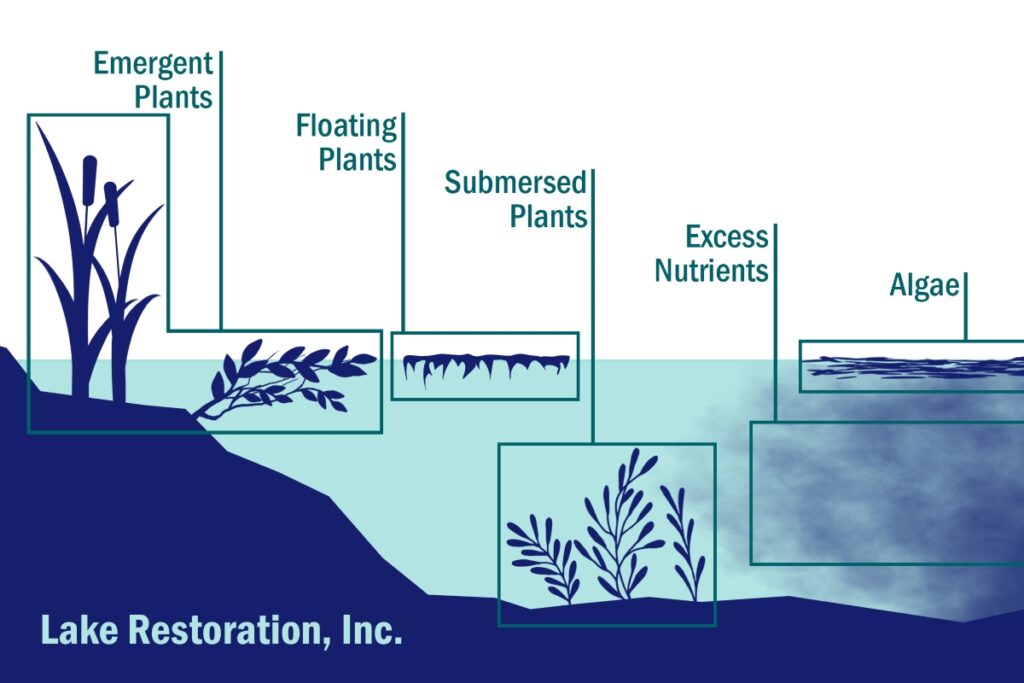
- plants: emergent, submerged, floating, and algae
- animals: vertebrates like amphibians, fish, mammals, and reptiles; and invertebrates like crustaceans and mollusks
- microbes: molds, fungi, bacteria, and viruses
This article will focus only on aquatic plants, and more specifically invasive aquatic plant species. There will be an explanation why to manage plants in and around the water, and the steps to managing them: identification of target species, notifying local or national agencies as appropriate, and then finding how to control aquatic invasive species as well as the state regulations around doing so. A few resources will also be shared.
List of AIS in the U.S.
Emergent Plants Definition
Emergent plants are usually rooted in the ground and grow near the edges of a body of water, emerging from the surface. Some plants are considered emergent even though the leaves only float on the surface, like water lilies, and other species can grow inches or even feet above the water level, like reeds, horsetail, or cattails.
Above Water Invasives
- alligator weed
- anchored water hyacinth
- Chinese water spinach
- common reed (Phragmites)
- giant reed
- purple loosestrife
Definition of Floating Plants
Floating plants are usually not truly rooted to the bottom of the water body; roots can hang into the water freely or modified leaves “hang on” to the sediment to keep the plant in place. Leaves can float on the surface or rise above the surface of the water. Coontail is technically a floating plant because it does not have true roots and is often loosely connected to the bottom by pale modified leaves.
Floating Weeds
- European water chestnut
- giant Salvinia
- mosquito fern
- water lettuce
Submerged Plants Definition
Submerged plants are rooted in the substrate and do not come up out of the water. There are a few species that have leaves that float on the water, like numerous types of pondweeds that have two different types of leaves: submerged and emergent (floating).
Underwater Weeds
- Cualerpa (algae)
- curly leaf pondweed
- Didymo (rock snot) (algae)
- Hydrilla
- Egeria
- Eurasian watermilfoil
- oxygen weed
Why Manage Aquatic Plants
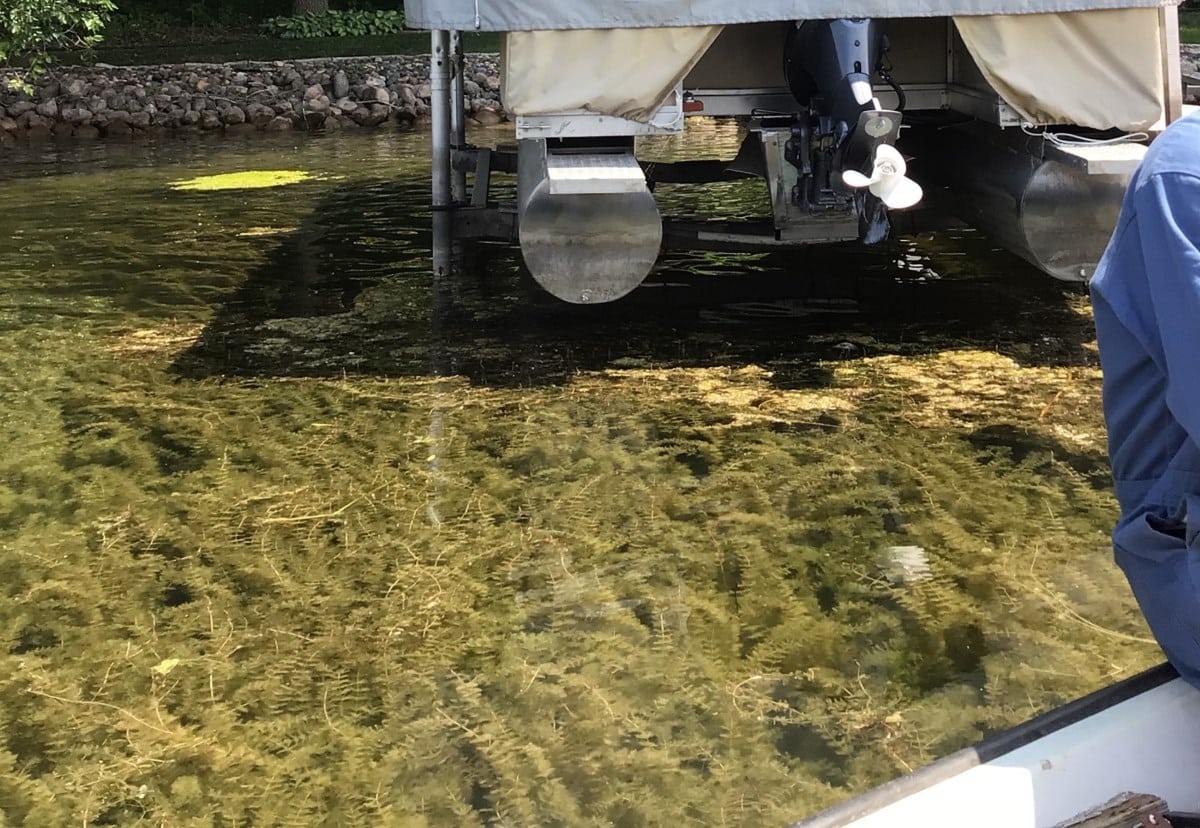
Having about 25% of any body of water covered with vegetation is considered a good healthy amount of vegetation. If more than 25% of the water body contains aquatic vegetation, it is a good idea to control the plants.
Invasives should be managed regularly so they do not overtake the entire body of water and/or crowd out the native plants. If that were to happen, aquatic life could be negatively affected. From microorganisms, like phytoplankton, to insects, fish, and even other wildlife that visit the pond or lake, they can lose their regular food sources or shelter.
Native plants grow more slowly and with more control than invasive plants. The native species have adapted to the specific conditions they are in, which makes them hardy. Depending on which part of the country they are in, native plants are usually resistant to drought or cold or other factors that their environment often experiences.
On the other hand, invasive species are not in their natural environment, so they reproduce at alarming rates for the best chances of survival. Because of this, plants that are considered invasive can crowd out and outcompete native plants. Sometimes the invasive plants start their growth cycles earlier than natives, not letting the natives grow at all.
This is why it is so important to know which types of plants you have in your lake or pond. If you have native species, it is beneficial to keep up to 25% of the water body with aquatic vegetation in it. If invasive species are present, controlling them early makes management easier in numerous ways: cost, time, and energy.
When controlling aquatic plants, invasive plants are often more susceptible to herbicides than native plants. Lower doses or concentrations of herbicides can be used to treat invasive species and sometimes save native plants in the area.
First Step: Identification
Some invasives can look like natives (lilies vs. lotus, Hydrilla vs. Elodea). Native plants grow with more control and in harmony with other species; invasives grow very quickly and overtake or crowd out native plants. Growth rate is one way to help determine if a plant is invasive or native.
The most helpful and accurate method for identifying aquatic plants is to take one or two of the plants out of the water and lay them on a flat surface that has a consistent background. Take multiple photos: a picture of the area where the weeds are growing, and a few close ups of the plants that have been taken out of the water.
Identification will come from looking at:
- leaf structure
- how leaves are attached to stems
- size of leaves and stems
- if flowers grow on plant
- what the flowers look like (size, color, petal shape and count)
- how the flowers grow (on their own stalk, right out of the stem, etc.)
- where the plant is growing (water depth, hardness, alkalinity, etc.)
Lake Restoration’s Aquatic Plant ID has lots of plants, both native and non-native, and can be searched using pictures of the weed in question. It is also possible to search for a plant name, part of a plant name, or simply peruse the pages of plants. An email of the area and close ups of the plant can also be sent to Plants@LakeRestoration.com. One of our specialists will respond within a day or two.
Second Step: Notify Your State Agency
In many states, you can report a sighting of an invasive species to the state’s department of natural resources or equivalent. In some states, you’ll report to the local university’s aquatic extension office.
The university’s extension office can be a great resource in identifying and controlling aquatic vegetation. Keep in mind that as a state agency, the people helping you are not allowed to recommend any brands of products. They can recommend active ingredients and give examples of brands, but they do not endorse or encourage specific companies or products. The same is true for services: they can recommend a type of service and give examples of companies who provide those services, but it will be up to you to ultimately research who will best fit your needs.
There is also a national list, called the Nonindigenous Aquatic Species list, compiled by the United States Geographical Survey (USGS). The link provided here goes directly to the list of aquatic plants, but there is lots of other information available as well: a place to report a sighting, an interactive map, lists of aquatic vertebrates and invertebrates (both containing sub-categories), searchable databases, and more.
Notifying state and federal agencies about aquatic invasive species sightings can be helpful in the overall control of them. Early detection is the best way to gain control and possibly even eradication of invasive aquatic plants.
Third Step: Find Out if You Can Treat the Weeds
If positively identified as invasive, find out how to best control the weeds. Manual, physical, or herbicide control are the most common and realistic options. Depending on the exact type of plant in question, one of these methods is likely better than the others. Sometimes, a combination of methods is recommended.
Treatment options of many plants are lined out on the Weed Control page of Lake Restoration’s website. Note that the listed options are not all-inclusive because there are no biological treatments listed, and the herbicides are limited to just what we sell.
Each state has different regulations. Some states allow treatment in any waters (Florida, Illinois); others specify treatment is okay in ponds or private waters only, not “waters of the state” (lakes) (Washington, California).
Permits are required in certain states for different reasons: to purchase any aquatic weed control product (New York); not to purchase, but to apply the products (Rhode Island), etc. Contact your state’s department of agriculture or equivalent to find regulations. The staff at Lake Restoration are also a good resource and know the general regulations as well as specifics of many states.
Some states also regulate which plants you can and cannot treat. For example, in Minnesota lakes, people are only allowed to treat cattails or water lilies if they are blocking access from the shore to the lake, and then the Minnesota Department of Natural Resources (DNR) will allow a 15-foot wide channel to be treated to access the lake. That is with a permit only.
Ponds are different: most can be treated as desired without a permit. Call 1-877-428-8898 option 2 to discuss state regulations regarding aquatic herbicide shipping and treatment. We are here to help you find the best solution to nuisance weeds!
There might be another alternative: have a local company come out and do the treatment for you! Lake Restoration is one of those companies; when people sign up for our services, we apply for their permit through the Minnesota DNR (if they live on a lake), then follow what is allowed on the permit to treat the lake shore twice per year using a combination of herbicides and algaecides.
We also treat hundreds of ponds each year, and those services are offered as 5-treatment or 7-treatment programs. We service the greater Twin Cities area only, but if you are outside that area or in another state, your extension office may know about companies local to you.
What if a Permit is Needed?
We can often help you find the permit application through your state’s agency. Information needed for a permit application can be found on each product page. The labels have EPA registration numbers, active ingredients, and more. Lake Restoration staff can also help with approximate amounts of products needed or anticipated treatment dates. Individualizing treatment plans is one of our favorite activities!
Resources
- USDA National Invasive Species Information Center
- Your local university’s extension office (they should have an aquatics division)
- US Geological Survey (USGS) Nonindigenous Aquatic Species
- Lake Restoration’s Aquatic Plant ID
- Lake Restoration’s Weed Control pages
Conclusion
Invasive species can have serious detrimental effects on wildlife, the environment, economy, or human health. That is why it is important to know what to look for. First identify the plants in question.
Report confirmed invasive sightings to your department of natural resources (or equivalent) or the local university’s extension office. Then find out if the weeds can be treated; some states require permits, others do not. Regulations vary greatly by state, so check with your state agency to find out if a permit is needed for purchase or application of herbicides. The professionals at Lake Restoration can give guidance on many state’s regulations; email LRmail@LakeRestoration.com or call 1-877-428-8898.